Our Products
Quality IBC tanks for every application
Get a Free Quote
Tell us about your IBC tank needs and we'll get back to you promptly
 Most Popular
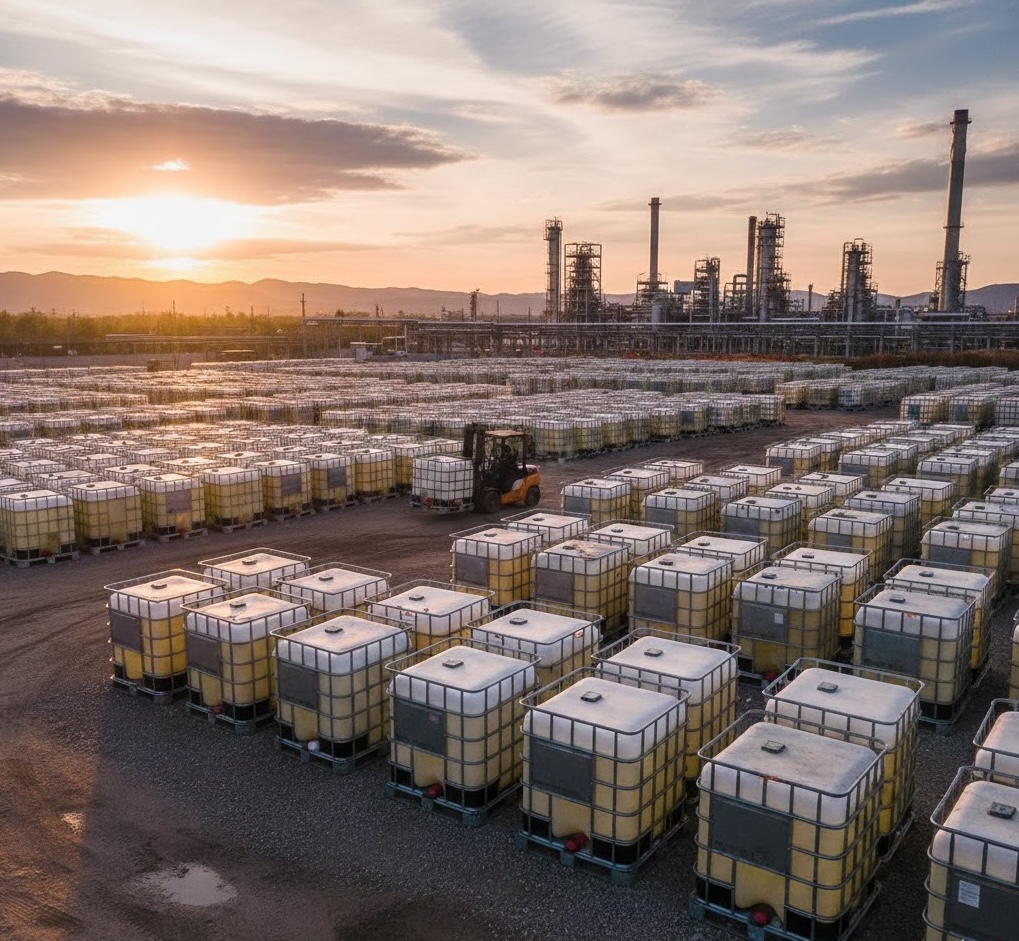
Used IBC Tanks
Quality pre-owned IBC tanks that have been thoroughly cleaned and inspected. Perfect for non-critical applications.
- Cost-effective
- Environmentally friendly
- Various sizes available
- Quick availability
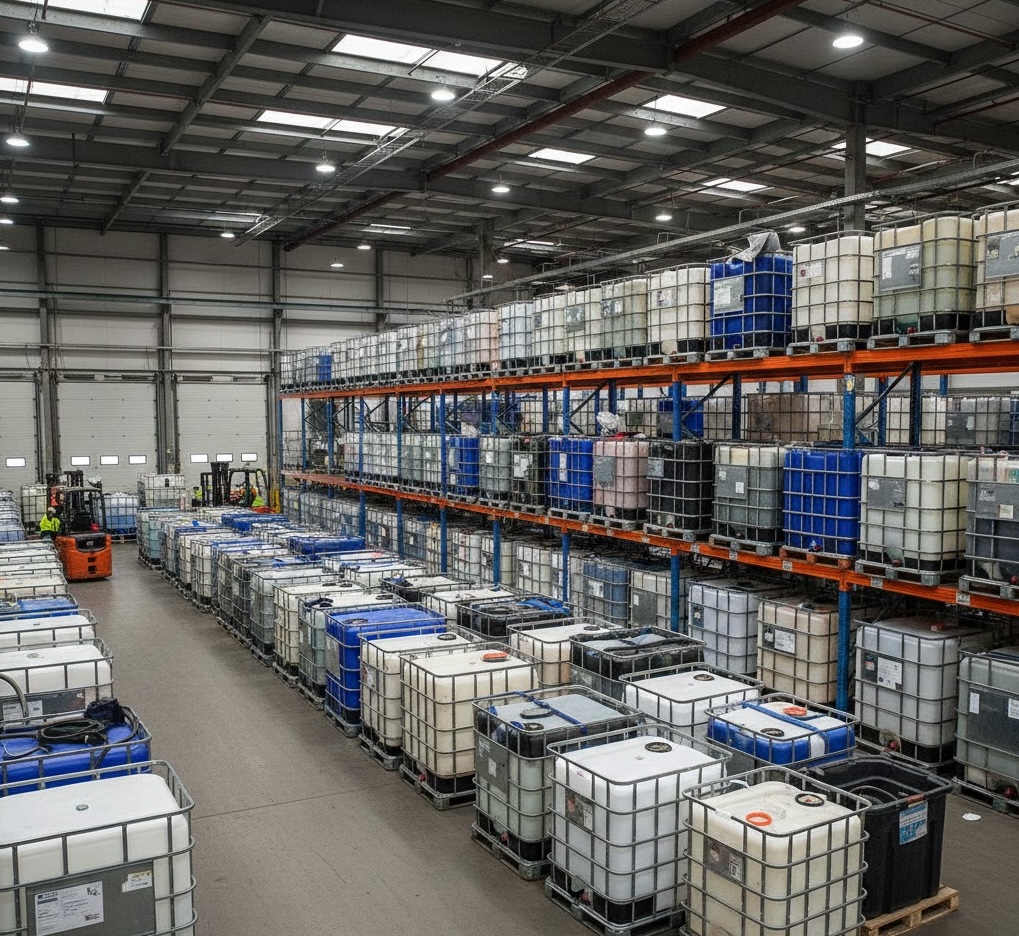
New IBC Tanks
Brand new IBC containers for applications requiring unused tanks. Available in various sizes and specifications.
- Factory fresh
- Full warranty
- Custom specifications
- Bulk pricing available
 Certified
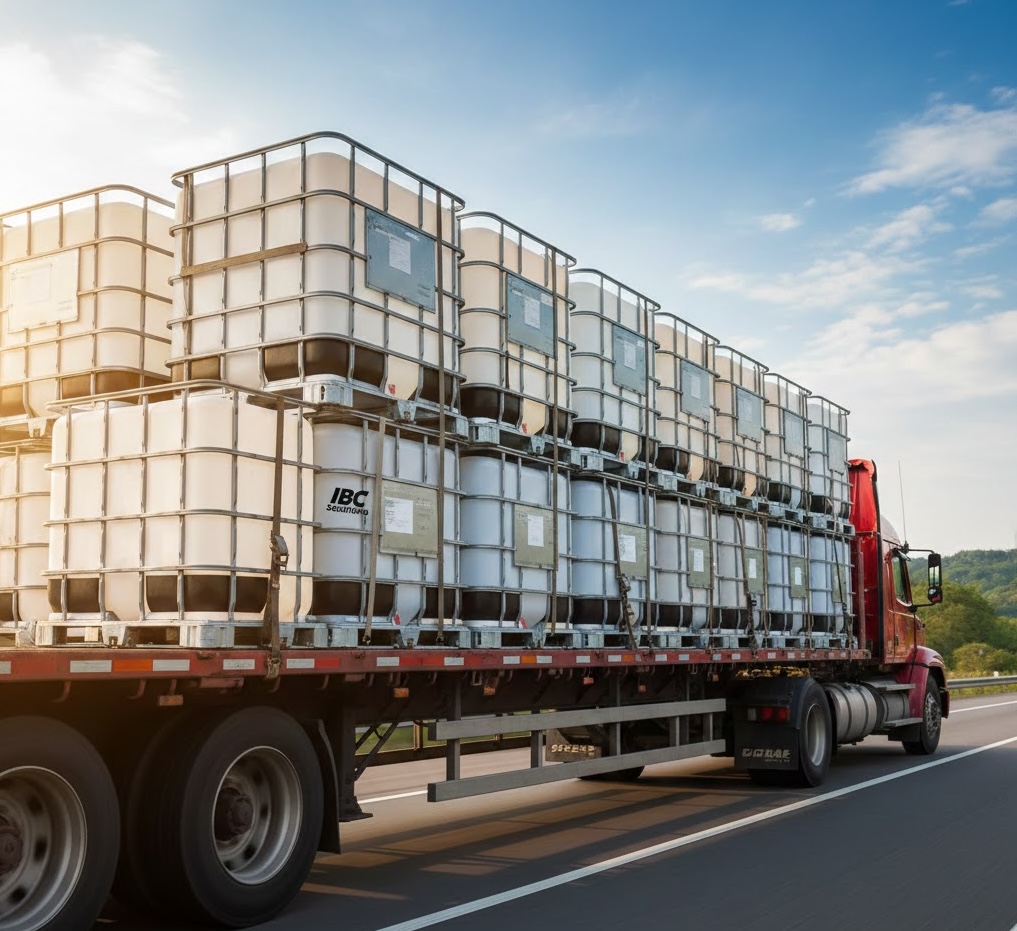
Food Grade IBC Tanks
Certified food-grade containers suitable for storing food products, beverages, and potable liquids.
- FDA compliant
- Rigorous cleaning
- Certificate included
- Ideal for beverages
 Industrial
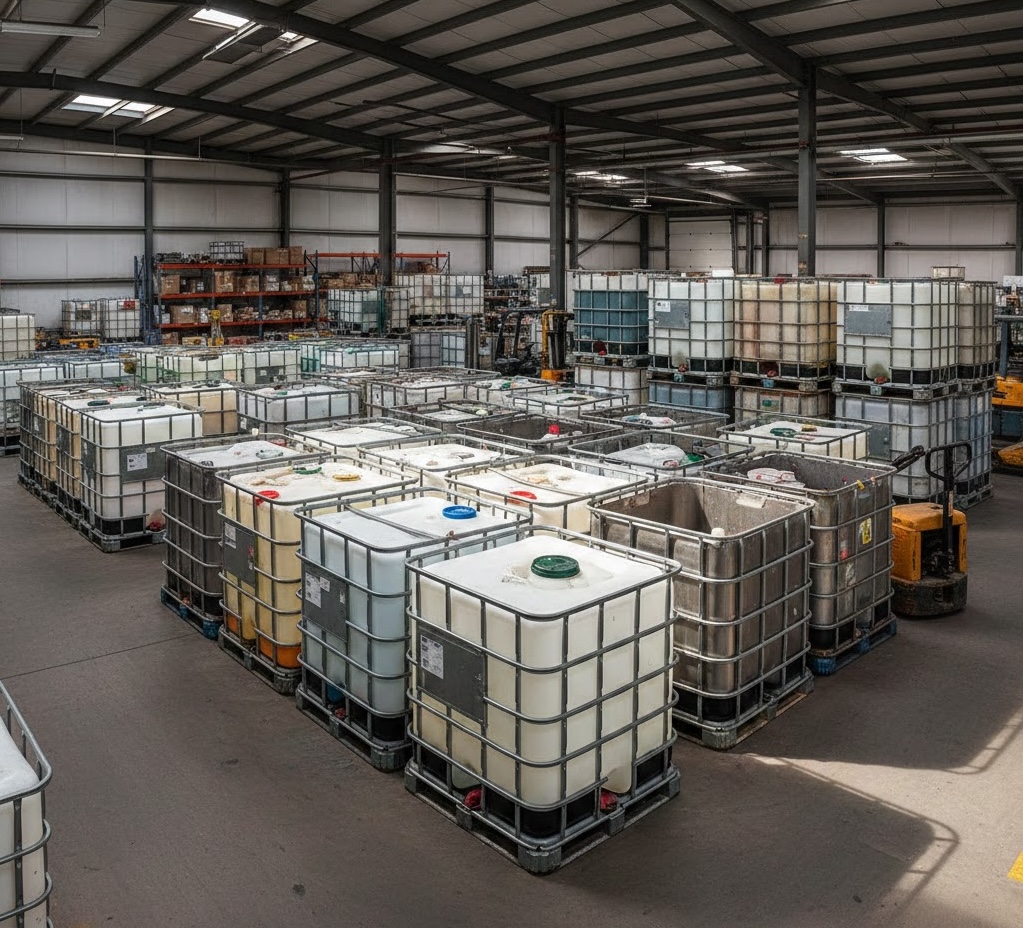
Chemical Grade IBC Tanks
Heavy-duty tanks designed for industrial chemicals and hazardous materials storage.
- Chemical resistant
- UN certified options
- Safety compliant
- Industrial strength
Understanding IBC Tank Components
HDPE Inner Bladder
High-density polyethylene container that holds the liquid. Food-safe, chemical-resistant, and UV-stabilized.
Steel Cage Frame
Galvanized steel cage provides structural support and protection. Allows for easy handling with forklifts.
Pallet Base
Available in steel, plastic, or wood. Steel pallets offer the best durability and forklift compatibility.
Fill Cap & Valve
Top fill cap for easy filling. Bottom valve (typically 2" butterfly) for controlled dispensing.
Which Tank Type Is Right for You?
Compare our different tank options to find the perfect match for your specific application and budget.
Used Tanks
Benefits:
- Most affordable option
- Immediate availability
- Eco-friendly choice
- Good for non-critical storage
Considerations:
- Cosmetic wear
- Limited history
- Not for food contact
Best For:
Water storage, irrigation, non-food industrial use
Reconditioned
Benefits:
- Balanced cost
- Quality assured
- Cleaned & tested
- Environmental benefit
Considerations:
- Not brand new
- Previous use history
Best For:
General industrial, agriculture, manufacturing
Food Grade
Benefits:
- FDA compliant
- Certified clean
- Documentation included
- Safe for consumables
Considerations:
- Higher cost
- More limited selection
Best For:
Beverages, syrups, food products
New Tanks
Benefits:
- Factory warranty
- No previous use
- Full documentation
- Maximum lifespan
Considerations:
- Highest cost
- May require ordering
Best For:
Critical applications, regulatory requirements
IBC Tanks Across Industries
Our tanks serve businesses in virtually every industry. Here are some of the most common applications.
Agriculture & Farming
Fertilizers, pesticides, water storage
Food & Beverage
Syrups, concentrates, oils, wine
Manufacturing
Raw materials, lubricants, coolants
Chemical Processing
Industrial chemicals, solvents
Construction
Water, concrete additives, sealants
Automotive
Fluids, oils, cleaning agents
Pharmaceutical
Purified water, processing chemicals
Cleaning Services
Detergents, sanitizers, water
Complete Technical Specifications
Our IBC tanks meet international standards for liquid storage and transport. Here are the detailed specifications you need to know.
Material Properties
HDPE Inner Bottle
- High-density polyethylene (HDPE) construction
- Food-grade options available (FDA 21 CFR 177.1520)
- UV-stabilized for outdoor storage
- Chemical resistant to most acids and bases
- Blow-molded seamless construction
Steel Cage Frame
- Galvanized tubular steel construction
- Welded corners for maximum strength
- Forklift-compatible design (4-way entry)
- Stackable up to 4 units when filled
- Rust-resistant zinc coating
Valve Options
- Standard 2" butterfly valve (NPS)
- 3" valve available for viscous liquids
- Ball valve options for precise control
- Camlock fitting adapters available
- Chemical-resistant EPDM gaskets
Frequently Asked Questions
What is the difference between 275 and 330 gallon IBC tanks?
The main difference is capacity and height. A 275-gallon tank is standard height (46") while a 330-gallon tank is taller (53"). Both have the same footprint (48" x 40"), so they fit the same pallet spaces. Choose based on your volume needs and height restrictions.
Can I use a used tank for food storage?
Only if it is certified food-grade. Regular used tanks may have held non-food substances and cannot be safely repurposed for food contact. We offer specifically cleaned and certified food-grade reconditioned tanks that meet FDA requirements.
How do I know what chemicals are compatible with HDPE?
HDPE is compatible with most acids, bases, alcohols, and water-based chemicals. However, it is not suitable for aromatic hydrocarbons, chlorinated solvents, or strong oxidizers. We provide compatibility guidance - contact us with your specific chemical requirements.
Are your tanks UN certified for transport?
Yes, we offer UN certified tanks (UN 31HA1 and UN 31HB2) suitable for transporting dangerous goods. Not all tanks carry UN certification - specify your transport requirements when ordering.
How long does an IBC tank last?
With proper care, a quality IBC tank can last 5-10 years or more. Factors affecting lifespan include UV exposure, chemical contents, handling, and storage conditions. UV-stabilized tanks last longer when stored outdoors.
Can IBC tanks be stacked?
Yes, most IBC tanks can be stacked up to 4 high when filled (check specific tank ratings). The steel cage provides structural support for stacking. Empty tanks should not be stacked more than 2 high to prevent cage damage.
Need Large Quantities?
We offer competitive bulk pricing for orders of 10+ tanks. Contact us for a custom quote tailored to your needs.